
4 Tips to Prepare for SAP EWM Go-Live and Hypercare Success
- June 5, 2026
An SAP Extended Warehouse Management (EWM) implementation can truly transform warehouse operations, but for many organizations, the real test begins after go-live.
While implementation teams spend months preparing for cutover, SAP EWM hypercare often receives less attention. As a result, organizations can find themselves scrambling to secure the specialized support needed to stabilize operations and maintain business continuity during the critical first weeks after launch.
KEY TAKEAWAYS
- Hypercare planning should begin months before go-live. Organizations that wait until the final weeks to define support needs often struggle to secure the specialized SAP EWM resources required for stabilization.
- Go-live readiness does not guarantee hypercare readiness. Successful stabilization requires dedicated support processes and defined ownership beyond system deployment.
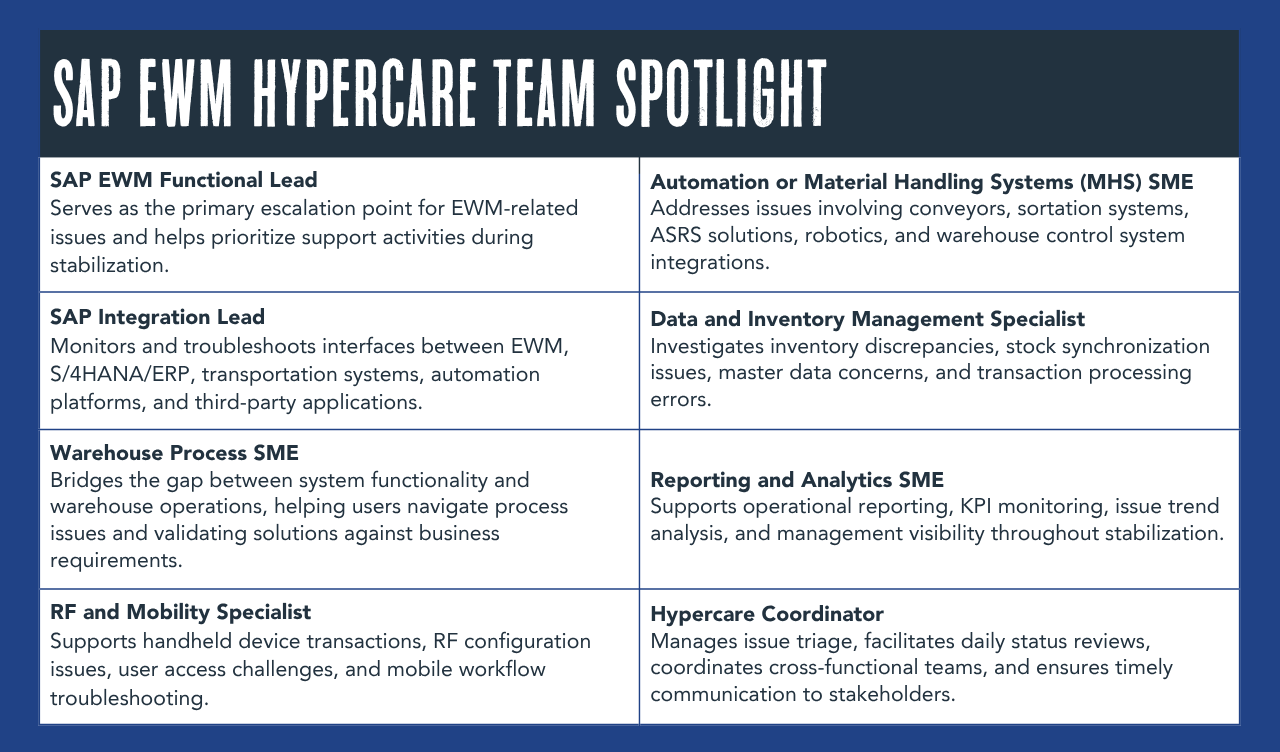
- SAP EWM expertise is often in highest demand when issues arise. Functional leads, integration specialists, warehouse process SMEs, and automation experts can play a critical role in minimizing operational disruptions during hypercare.
- Support demand is frequently underestimated. Even well-tested SAP EWM implementations can experience increased issue volumes and user questions.
- Organizations that proactively staff and structure hypercare are better positioned to realize value from their SAP EWM investment.
At BCTG, we’ve seen this challenge emerge repeatedly across SAP EWM programs. In several recent engagements, organizations reached out shortly before or immediately after go-live because they lacked the EWM resources necessary to support hypercare activities. In one case, a client needed four specialized EWM resources and was struggling to fill the roles internally. In another, the organization required eight EWM support resources to sustain round-the-clock operational coverage during stabilization.
While every implementation is different, here are four steps organizations can take to set their teams up for a smoother transition:
PREPARING FOR SAP EWM HYPERCARE
Build Your SAP EWM Hypercare Team Earlier Than You Think
Many organizations focus heavily on project staffing but wait too long to define their post-go-live support structure.
The skills required during hypercare are often different from those needed during design and configuration. Hypercare teams need individuals who can quickly troubleshoot warehouse execution issues and make rapid decisions under pressure.
Rather than waiting until the final weeks before go-live, identify required support roles at least three to six months in advance. This gives organizations time to secure internal and external resources and establish clear responsibilities before the first production issue occurs.
In one recent example, a food processing and distribution company realized the need to deploy EWM resources to each of their key warehousing and distribution facilities only days before go-live. It became apparent that the user community at each facility would need face-to-face guidance and support as they adopted new processes and transactions in the new systems. BCTG deployed four SAP EWM SMEs to travel in two-week intervals to each key facility to adopt the new system, troubleshoot typical hypercare issues, and document any required enhancements.
Identify Critical Skill Gaps Before Go-Live
Not all support resources are interchangeable. As such, organizations should assess whether they have sufficient expertise across key SAP EWM functional areas, including:
- Inbound processing
- Outbound processing
- RF and mobile transactions
- Labor management (if applicable)
- Integration points with SAP S/4HANA
- Warehouse automation and material handling systems (MHS)
A skills assessment can reveal gaps that may not become apparent until production volumes increase and real-world exceptions begin occurring.
Pro Tip: Organizations often discover during hypercare that their greatest need is not additional project resources, but specialists with deep SAP EWM operational experience who can quickly diagnose issues and minimize disruption to warehouse operations.
Plan for Higher Support Demand Than Expected
Many project teams underestimate the volume of support requests generated during the first several weeks after go-live.
Even well-tested systems encounter unexpected issues when real users, real inventory, and real customer orders enter the equation. Transaction errors, process questions, integration failures, and user adoption challenges can create a surge of support tickets.
Organizations should plan staffing levels based on peak support demand rather than average demand. Having additional coverage available is far less costly than operational disruption during a critical stabilization period.
In another instance, a global specialty chemical and advanced materials manufacturer realized its need to bring eight facilities online within the same week. With locations around the globe, it proved impossible to support all facilities without SAP EWM experts at each location. By tapping a rich network of consultants, BCTG identified and deployed resources with the requisite skills and travel flexibility to visit each location in 4–6-week intervals during hypercare. To minimize cost and optimize future enhancements, the team collected and documented insights from each facility to shape future phases of functional deployments.
Establish Clear Escalation Paths
When warehouse operations are impacted, speed matters. Hypercare teams should have documented escalation procedures that define issue severity levels, response time expectations, decision-making authority, business and IT ownership, and any additional executive escalation criteria.
Without clear escalation paths, issues can remain unresolved longer than necessary, increasing operational risk and user frustration.
FINAL THOUGHTS
A successful SAP EWM go-live requires more than system readiness. It requires operational readiness and access to the right expertise when issues inevitably arise. Organizations that begin planning their SAP EWM hypercare strategy early can significantly reduce risk during stabilization and accelerate their path to long-term success.
As recent market demand has demonstrated, securing experienced SAP EWM resources during the final stages of an implementation can be challenging. But the organizations that prepare early are often the ones best equipped to navigate go-live with confidence.